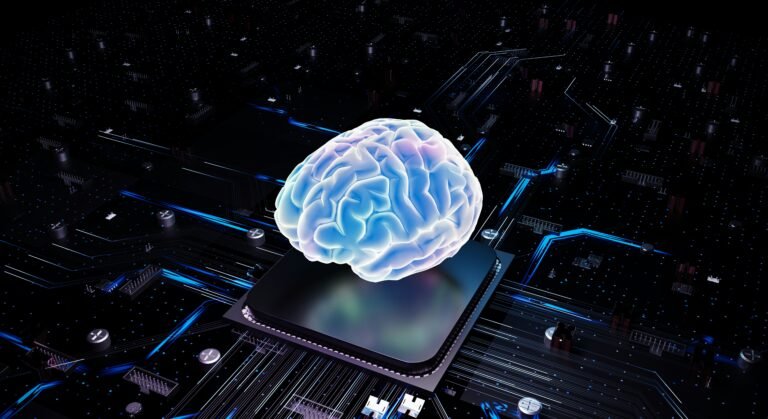




Artificial intelligence is used in modern digital systems to improve automation, decision making, and system performance. Automation means completing tasks without continuous human input. When artificial intelligence is added, systems become capable of learning, adapting, and improving over time.
Digital systems are used in businesses, education, healthcare, communication, and online services. Artificial intelligence helps these systems work faster and with fewer manual tasks.
This article explains how artificial intelligence improves automation in modern digital systems.
What is Artificial Intelligence in Automation
Artificial intelligence refers to systems that can perform tasks that normally require human intelligence.
In automation systems, AI is used to:
- Process data
- Make decisions
- Control systems
- Learn from patterns
- Improve performance
What is Automation in Digital Systems
Automation is the use of technology to perform tasks automatically.
It includes:
- Software automation
- Industrial automation
- Workflow automation
- Data processing automation
Automation reduces manual effort and increases efficiency.
Role of Artificial Intelligence in Automation
Task Execution
AI systems perform repetitive tasks without human input.
Decision Making
AI analyzes data and makes decisions based on patterns.
Learning Ability
Systems improve performance over time using data.
AI in Data Processing Automation
Data Collection
AI gathers information from different sources.
Data Analysis
It processes large amounts of data.
Result Generation
AI provides output based on analysis.
AI in Business Automation
Customer Support
AI chat systems handle customer queries.
Sales Management
AI tracks sales and customer behavior.
Workflow Automation
Business processes are managed automatically.
AI in Communication Systems
Messaging Automation
Systems respond to messages automatically.
Email Filtering
AI separates important and spam emails.
Virtual Assistants
AI helps manage communication tasks.
AI in Education Systems
Online Learning
AI supports digital learning platforms.
Personalized Learning
Systems adjust content based on student performance.
Automated Assessment
AI checks tests and assignments.
AI in Healthcare Systems
Diagnosis Support
AI analyzes medical data.
Patient Monitoring
Systems track health conditions.
Medical Records
AI organizes patient information.
AI in Industrial Automation
Production Systems
Machines operate automatically using AI.
Quality Control
AI checks product quality.
Supply Chain Management
Systems manage logistics and inventory.
AI in Security Systems
Threat Detection
AI identifies cyber threats.
Access Control
Systems verify user identity.
Fraud Detection
AI detects unusual activity.
Machine Learning in Automation
Pattern Recognition
Systems identify data patterns.
Predictive Analysis
AI predicts future outcomes.
System Improvement
Performance improves over time.
AI in Cloud Systems
Data Management
AI organizes cloud data.
Resource Allocation
Systems manage computing resources.
Automation Tools
Cloud services use AI for tasks.
AI in Mobile Applications
Smart Apps
Applications adapt to user behavior.
Voice Assistants
AI processes voice commands.
App Automation
Tasks are completed automatically.
Benefits of AI Automation
Efficiency
Tasks are completed faster.
Accuracy
Reduces human errors.
Cost Reduction
Reduces manual labor costs.
Scalability
Systems handle large workloads.
Challenges of AI Automation
Data Privacy
Sensitive data must be protected.
System Dependency
Over-reliance on automation systems.
Technical Complexity
Requires skilled management.
Future of AI Automation
Future systems may include:
- Fully autonomous systems
- Advanced predictive models
- Smarter digital assistants
- Integrated global automation networks
Conclusion
Artificial intelligence improves automation in modern digital systems by increasing speed, accuracy, and efficiency. It supports business operations, communication, education, healthcare, and security systems.
AI-based automation reduces manual work and improves system performance. As technology grows, AI will play a larger role in digital systems.
FAQ
What is AI automation?
It is using artificial intelligence to perform tasks automatically.
How does AI improve automation?
It increases speed, accuracy, and decision making.
Where is AI automation used?
In business, healthcare, education, and digital systems.
What is machine learning?
It is a system that learns from data patterns.
What is the future of AI automation?
It will include more advanced and autonomous systems.